

“White supremacy culture” was an article written and published in 1999 by Tema Okun. She opened that piece with a dedication to the late Kenneth Jones, and says it “builds on the work of many people, including (but not limited to) Andrea Ayvazian, Bree Carlson, Beverly Daniel Tatum, Eli Dueker, Nancy Emond, Kenneth Jones, Jonn Lunsford, Sharon Martinas, Joan Olsson, David Rogers, James Williams, Sally Yee, as well as the work of Grassroots Leadership, Equity Institute Inc, the People’s Institute for Survival and Beyond, the Challenging White Supremacy workshop, the Lillie Allen Institute, the Western States Center, and the contributions of hundreds of participants in the DR process.”
The first characteristic Okun lists in her article is perfectionism. In this section and several others, she cites “the work of Daniel Buford, a lead trainer with the People’s Institute for Survival and Beyond who has done extensive research on white supremacy culture.”
Okun describes herself as, “a white woman, currently cisgender and able-bodied, upper class. I am older, sometimes an elder.”
She adds after this description, “I have lots of so-called credentials - degrees and a book and articles and poetry and art and curriculum and talks and speeches and teaching and consulting and mentoring and ... my hope is you would care more about my heart than anything. I am conditioned to be fearful while determined to be open-hearted and I live in that ongoing tension each day with as much grace and humor as I can muster. I am deeply puzzled by why and how we seem to value profit over people and why and how we base our belonging on who we can keep out rather than who we welcome in. And by we, I mean our culture, our white supremacy capitalist patriarchal ableist heteronormative fool of a culture. I am deeply moved by how so many of us do all in our power to refuse the invitation into such toxicity and I admire both up close and from afar all engaged in the solidarity effort to live into the world we all want and deserve.”
The website is an interactive book, and it says: “These characteristics are not meant to describe all white people. They are meant to describe the norms of white middle-class and owning class culture, a culture we are all required to navigate regardless of our multiple identities.”
Another excellent resource on this subject is Dismantling Racism.
-----------------
I am not writing here as someone who has a new, unique take on something many others have worked extensively to define for decades. Instead, I am writing a reflection of my own imperfect attempts to dethrone perfectionism in my own mind and life.
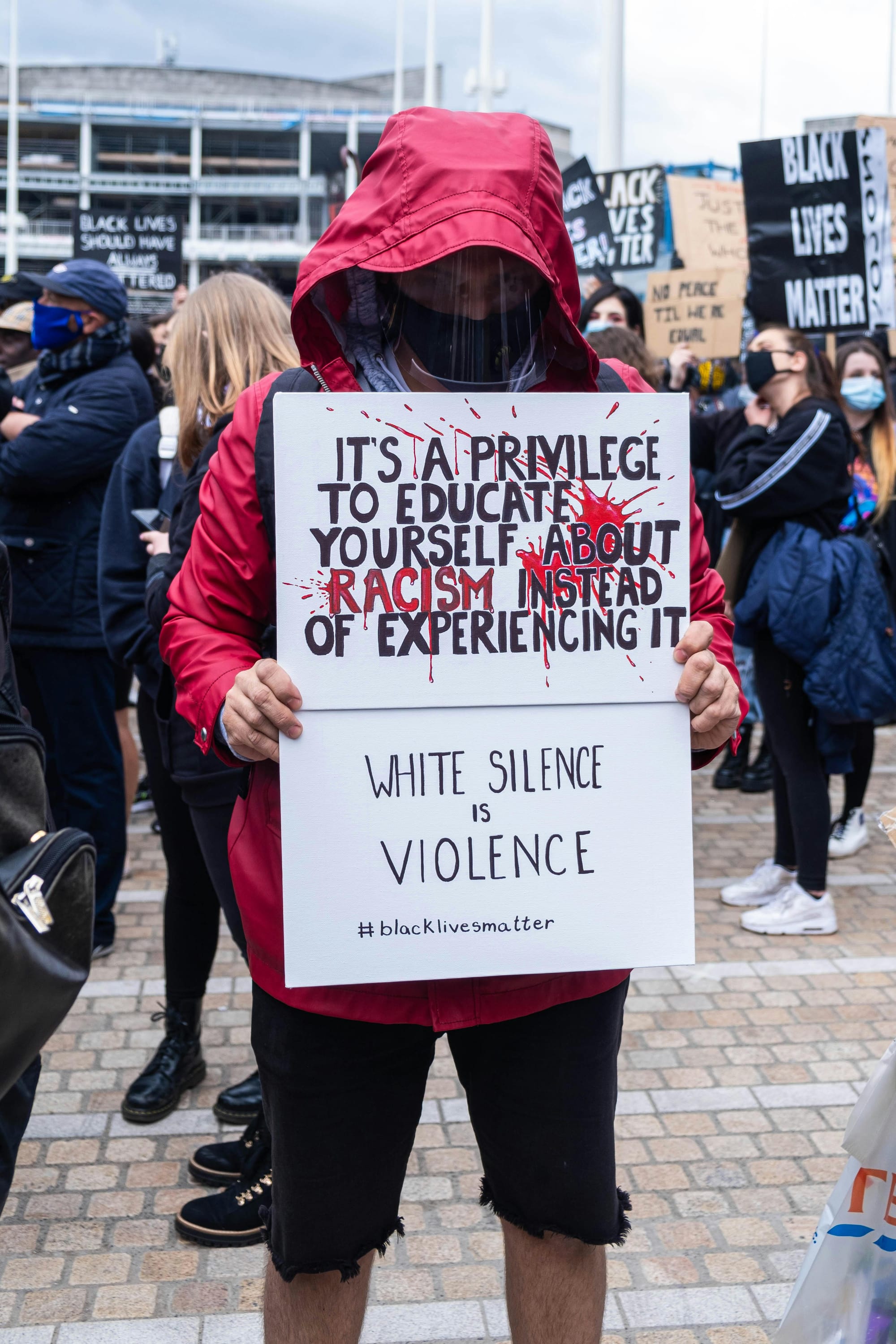
I am a product of white culture. My family, like many racist families, would never openly admit to being racist. I am mostly, perhaps entirely, of German and Swedish descent. Most of my extended family is Catholic or some flavor of Protestant. We are settlers and colonizers. I struggle to admit that I am racist, but I know this struggle is rooted in generations of denial.
I know that racism is not something I can easily unlearn, and I will never arrive at being perfectly free of racism. Lately I’ve been trying to reckon with perfectionism in terms of its racist roots. This is not work that will ever be complete, and that’s okay. To expect otherwise is a perfectionistic standard, and it is well-established that perfectionism is a pillar of white supremacy.
Three similar thought patterns show up alongside perfectionism. These are identified on Okun’s website as “One right way,” “Paternalism,” and “Objectivity.” I highly recommend the website in full, and this page explores these concepts further.
I expect perfection from myself and the world, impossibilities that keep me simultaneously too good and never good enough. I assume that I know how things should be, and this is a default, even if I know that there are tons of people who know more than I do about a great number of things. I am disappointed in myself when I feel that I’ve failed at doing something just right. I constantly feel overwhelmed because nothing is enough. Even if I do more today than I did yesterday, every day is so hopelessly far from perfect. The result is inescapable inadequacy.
The part of me that’s “too good” can be hard to identify, because it’s the part of me that thinks I know what perfection means. Perfection doesn’t exist. It is vague and abstract, and I could spend many lifetimes trying to get closer to it, never succeeding. When I think I’m not good enough because I’m not perfect, I’m telling myself that I know better than what’s real, and therefore I’m inadequate.
“If the world is not good enough for me, it is not worth living in.” This logic is the stuff of white cishet male philosophers. For so much of my life, I have grown accustomed to the lies of depression. It tells me life is not worth living, it tells me things are too hard, it tells me my life is meaningless. There is extensive scientific research indicating that we feel first and think afterward. It is hard-wired into our evolutionary biology. Instinct is older than cognition. When we think we are being logical, we are most often justifying the emotions beneath the words. I’ve had to learn that these are emotions, not truths. They feel true. They lie.
I have been catching myself in these thought processes and combatting them. I have to remember that perfection isn’t real. I have to remind myself many times every day, because perfectionism is deeply rooted in me. It is older than my own being, something I inherited from the colonizers who brought me into this world.
We were taught that god is perfect and humans must strive to be perfect. We were taught that there is only one way to be good – to make jesus the lord of our live. We were taught that perfection is real, and that we will not be perfect until we get to heaven. My ancestors were taught this, my ancestors forced this upon the people they colonized and committed genocide upon.
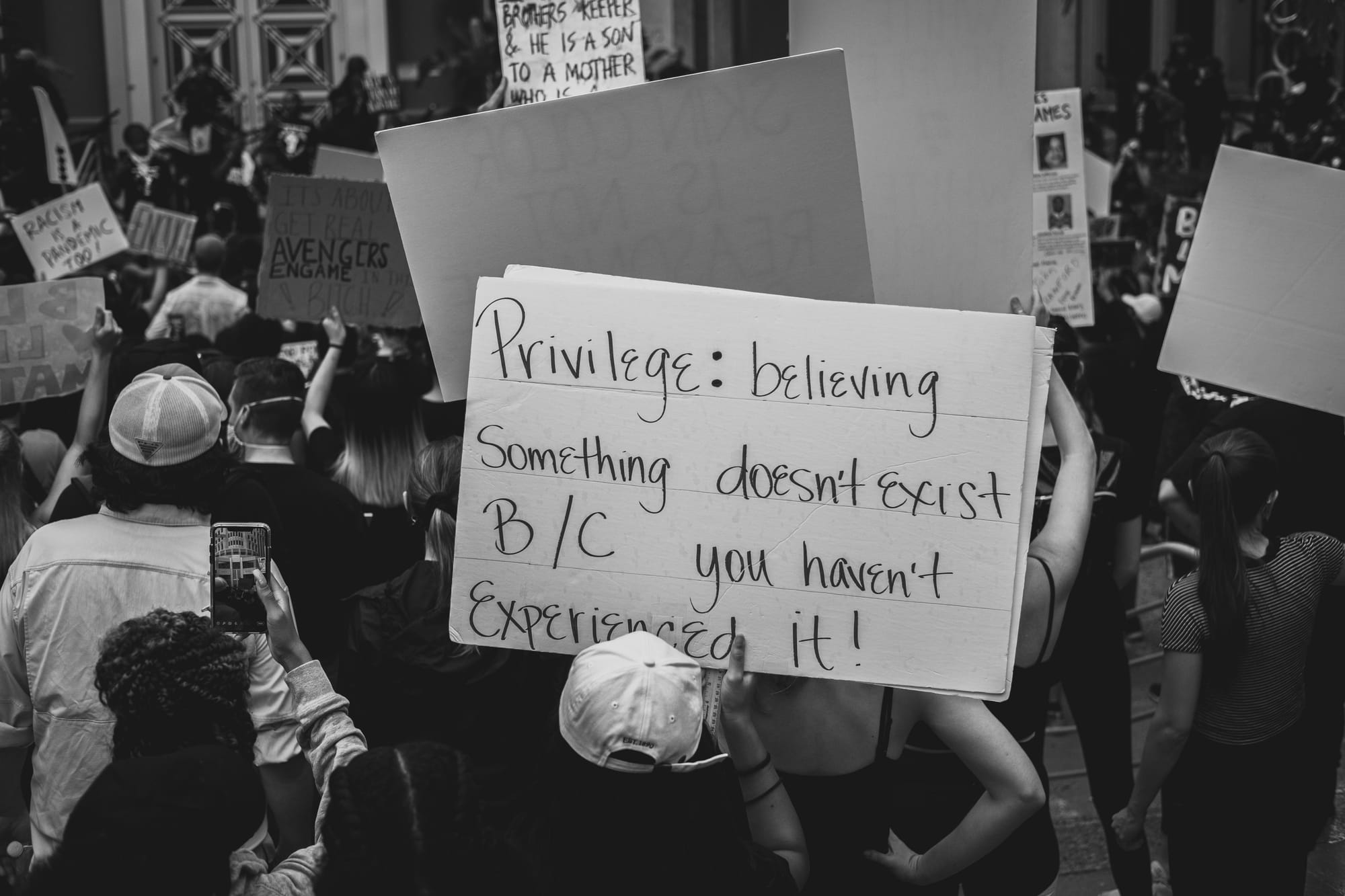
I am still benefiting from this violence. I am still learning how to accept the reality that I inherited the spoils of colonization. I can unlearn and undo a great deal in my life, but perfection is not the goal. Perfection is not real. The goal is to understand a different way of being. A complex way that doesn’t rely on hierarchal structures, myths of patriarchy, or human sovereignty over other kinds of life. I am not the center of this story. I am part of something bigger than myself, but it’s not “god’s plan.” It’s collective and social care for other humans and the world we inhabit.
I read and study these things so that I can better embrace imperfection, not continue to chase perfection.