We’re All Statistics (And That’s Okay)


I was watching a documentary when this thought occurred to me: we’re all statistics. To be more accurate, I should say that my partner was watching a documentary and I was only partially paying attention. It was the Ken Burns documentary on Cancer from 2015, based on the 2010 book by Siddhartha Mukherjee, “The Emperor of All Maladies: A Biography of Cancer.” My partner finds cancer deeply fascinating, but I get lost in the medical terminology and gruesome details (skip the next two paragraphs if you’d like to avoid those here).
The story was about a surgeon in the 1890s who was committed to doing surgeries that went too far. William Halsted operated on women with breast cancer, and he assumed that mastectomies would remove the cancer. As his career progressed, so did the extremity of his approach. Halsted’s legacy would be to have the term “radical” associated with his surgeries. He didn’t just remove the breast, but the pectoralis minor and the pectoralis major. The author describes the latter as “the large, prominent muscle responsible for moving the shoulder and the hand.” He continues, “When cancer still recurred…he began to cut even further into the chest…he began to slice through the collarbone, reaching for a small cluster of lymph nodes that lay just underneath it.”
There are many lessons to be taken from this story of a surgeon who seemed too eager to cut deep. Mukherjee rightly asks, “But did the Halsted mastectomy save lives?” Part of the problem, he points out, was that it takes years to tell if someone has avoided recurring cancer. Another problem is that he didn’t separate patients with different stages of cancer, so of course there would be more chances of success with someone whose cancer hadn’t spread far yet. In retrospect, of course, it’s easy to see that he didn’t follow the data. He was more committed to a surgery going deep than whether it was effective. It’s a lesson in how harmful hubris can be. He hadn’t found a cure for cancer, and further harmed those women as they suffered and died anyway.
This made me think about the sheer number of people it takes to do research. Cancer patients are a serious group of people to be experimenting upon. In fact, the entire medical field has been a construct of trial and error, of research and analysis. Every doctor must learn extensively from the building blocks placed by those who practiced medicine before them. We know a lot now that we didn’t just a century ago. That is thanks to millions of doctors and billions of patients participating in trying to survive illnesses. Hundreds of cancer patients underwent severely disabling surgeries, only to find out that they would ultimately be ineffective. Even finding out what doesn’t work requires data.
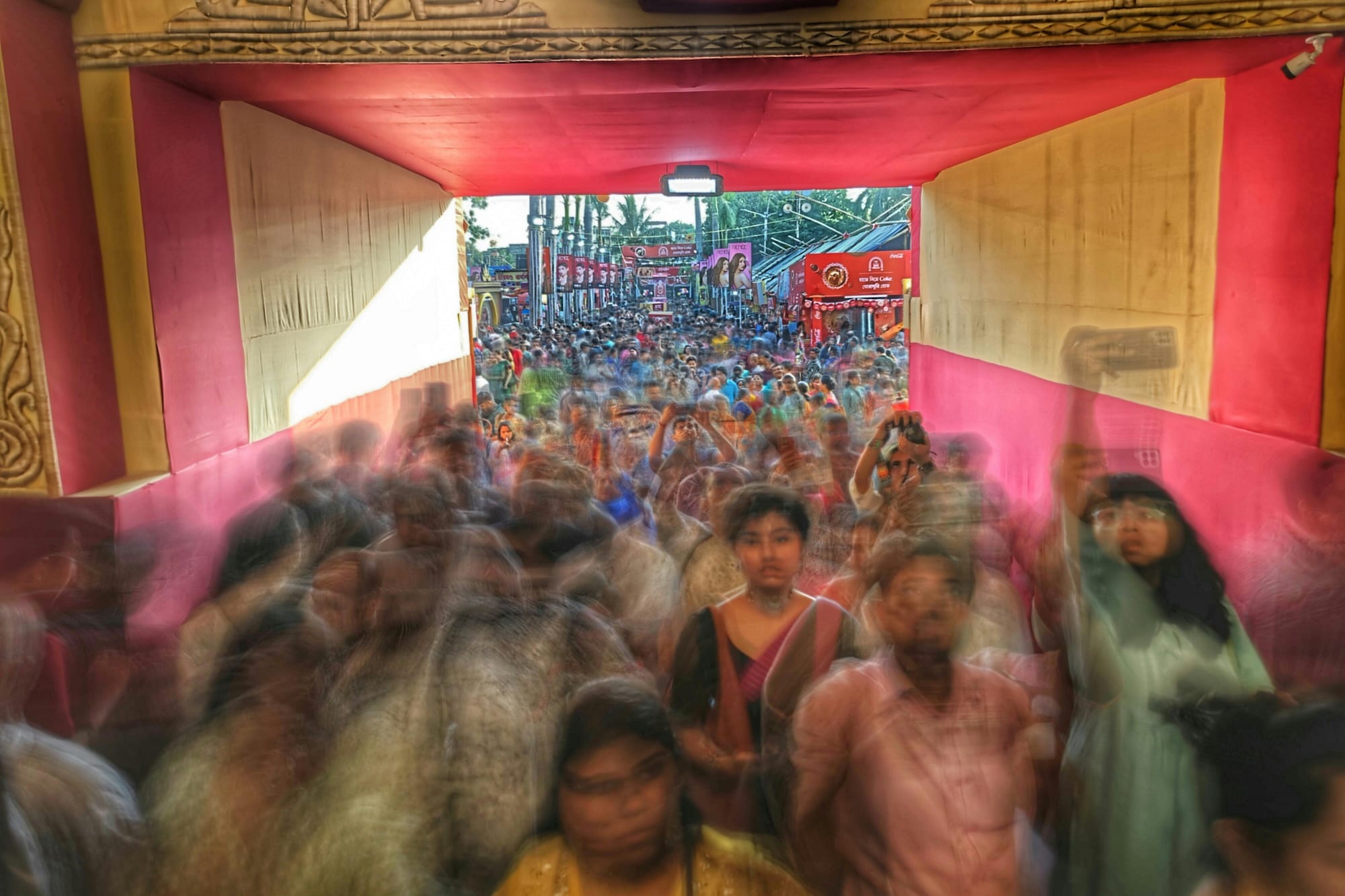
I thought of the way people use the phrase “become a statistic.” We say it like it’s a horrible fate, that our entire complex lives will be reduced to a number. However, statistics are more than what lands in the passing details of a news article. They are data, providing clues and discoveries about how to address societal issues. The individual may be one of many, but the aim of understanding the data is bigger than the individual. In this sense, “becoming a statistic” is a way to transcend the individual. We participate in something bigger than ourselves.
We exist in a vast array of statistical sets and subsets. It’s possible to be many, not only one. Our relationships create relative distance from each other. My partner knows thousands of things about me. Different people in my life know me in different contexts. My doctor knows my medical information, but my physical therapist knows my determination and willingness to push my physical limitations. My mental health therapist knows me in a different way than my psychiatrist. Together, each of these professionals knows different aspects of how I am changing. I am a statistic in many different kinds of data.
We aren’t reduced to becoming statistics because of how we die. The other aspects of our lives matter, too. One person’s statistic is another person’s data and is another person’s loved one with a million memories. A news article is only one way that statistics show up. They inform advances in science and understanding. It’s okay to be a statistic, and in truth, all of us are many statistics. I benefit from the statistics of the past, the deaths that meant immense grief to people whose names I will never know. I marvel that we are interconnected to such great degrees.