Identifying Poison
One of my favorite creators online is Black Forager. Alexis makes fun videos describing ways to eat or utilize wild plants and fungi.
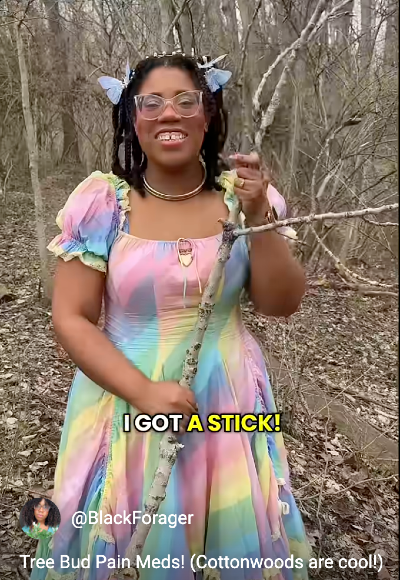
She has a series called “Poison or snack?” and she sings a song while comparing similar-looking plants. The song goes like this:
“One of these is poison and one is a snack
Which one are you choosing? A or B? This or that?
We’re gonna learn about ‘em together and that is a fact
‘Cause one of these is poison and one is a snack!”
Here are a few examples from her YouTube shorts:
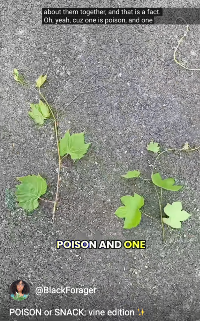
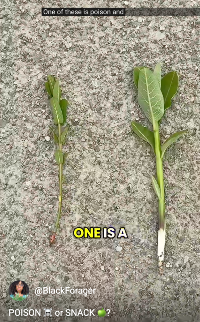
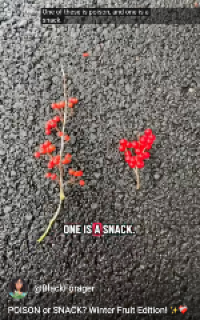
They look so similar!
I’m terrified to study foraging, because while it seems like a useful skill, one mistake is very dangerous. It requires an extensive amount of memorization and identification abilities. There isn’t one simple set of rules, like “all red berries are poisonous” or “never eat a white mushroom.” The fact is that identifying poison is a skill that takes study, practice, and care.
Just as it’s complicated to learn to identify the poison in the natural world, it’s complicated to learn to identify poison online. In fact, what we consume for hours each day on the Internet is harder to differentiate because the poison often works very slowly on our minds.

The Internet offers information, but it doesn’t have a clear way to sort out what is helpful and true, or dangerously misleading. Instead, there are tons of pathways in a labyrinth that devours minds.
I wish I was being dramatic, but I’m not.
People are radicalized in the worst ways online. Browsing quickly leads to (or reinforces) racism, misogyny, and warped perceptions of the shape of the Earth.
The human mind did not evolve alongside the Internet. We are supposed to be identifying poisonous plants, not trying to decide if something we’re reading on our smartphone is true.
What we believe can be hazardous for our health. But this has been true for millennia. It didn’t start with the Internet.
It’s hard to tell what is accurate, and even then, it’s not always useful and helpful to know. I am aware of many problems that I can’t solve. I try to be informed, but what does it mean to “be informed” these days?
Every site’s feed is endless, demanding as much attention as possible. These algorithms are hungry for our time. That time could be better spent dismantling the structures that create those problems. We know that…but how?
I could give a list of ways that I go about deciding what is true, but that would only offer a limited perspective.
I am not right about everything. Nobody is.
It’s easier to accept easy answers than complexity. There is no one source that I turn to for answers about everything. That statement alone is too strong for many people. It’s easier to believe that one source has the ultimate truth. That’s where we get holy books with billions of believers.
Skepticism, however, is not enough to find the most honest and helpful information. It’s only part of the process of discovery and clarification. When skepticism itself is treated like the ultimate value, it has nowhere to go and cannot build. One example of this is the skepticism of Richard Dawkins and many other atheists who want to criticize “religion” without deconstructing the colonizer mentality that saturates Christian culture.
There is not one clear measurement device for identifying what is true and what is useful.
Even a simple question like “What do I want?” Is overwhelmingly large. I want many things that I do not think are realistic. I don’t know exactly where realism and hope meet. I know that things change, and the smallest things can be catalysts for big changes.
I want to be part of something bigger than myself, but I also want to take actions that are meaningful and impactful.
The question of what to do is informed by what is going on. If we believe we are powerless, we are less likely to take action. However, it’s also possible to divert our attention. I might put my time and energy into something that seems important but actually isn’t. Many factors determine who benefits from my distraction.
What I’m getting at here has taken many years to develop in my mind, and it remains in process. I don’t expect a neat conclusion to appear and provide closure. I want to know what is true, what is important, what can be done, and what I can personally do.
Such questions are too vague for search engines or chatbots. They may seem abstract, but they matter a lot. What we believe impacts how we behave, and how we behave impacts the world we co-create.
In light of all this, I have been doing my best to find resources that challenge me to think carefully about what I consume. I know nobody is going to be accurate all the time, but I should trust experts in their respective fields of expertise. I understand that anyone can twist information to suit their own agenda. I recognize that I am susceptible to biases and assumptions. I will not always make the right call.
For months, I have been gathering resources to help with this problem. I took a class on logic at the beginning of the year, and that helped a lot. One resource I found through that class is this video series about verification skills:
CTRL-F: Intro to Verification Skills
I’ve added a new link to the top of my website. If you click on “Resources,” it will take you to a page full of links that I’ve been very carefully gathering. I will continue expanding it as time goes on, so if you notice any issues or want to add ideas, please let me know! You can email me at artemisevrenstardust@gmail.com or comment on this post.
We must be aware of the many poisons online, and how to sort them out. We need to help each other remain wary and informed. There is too much poison for us to try tasting everything alone.