Messages in Bottles

As promised, I’ve been busy with school and writing less because of it. I’ve been thinking a lot about the different ways I can use my platform, and what it means to blog. For so long it has felt fruitless. So many big platforms have swept in to scoop up smaller platforms and streamline them for profit. I mean, Wired magazine has a piece now called “Please Let the Internet Die.” Under the headline, it says, “Online spaces are captured by oligarchs and saturated with slop—and they’re exacerbating humanity’s worst impulses. It’s time to start over.”
I’d read it, but it’s paywalled and I’m poor. Even a low fee competes with basic necessities. I suppose I’ll write my own thoughts without a paywall to hide them.
School means a rearrangement of my communication rituals. I’m out of my old loops and into different ones. The classroom setting provides an unfamiliar place to communicate and analyze communication itself. We’ve been reading analysis on communication from the past century or so. We’re discussing how people communicate, and how different messages are sent and interpreted. As a writer, I’m shocked to learn that words make up very little of communication. Far more signals land in appearance, facial expression, body language, and vocal tone.
This is news to me because I have been online for most of my life, to the exclusion of in-person interactions. As a teen, I frequented a forum of other homeschooled teens. I looked forward to being allowed to get Facebook as a young adult. I saw my “friends” at homeschool speech and debate tournaments. Even now, the classroom is an unfamiliar place.
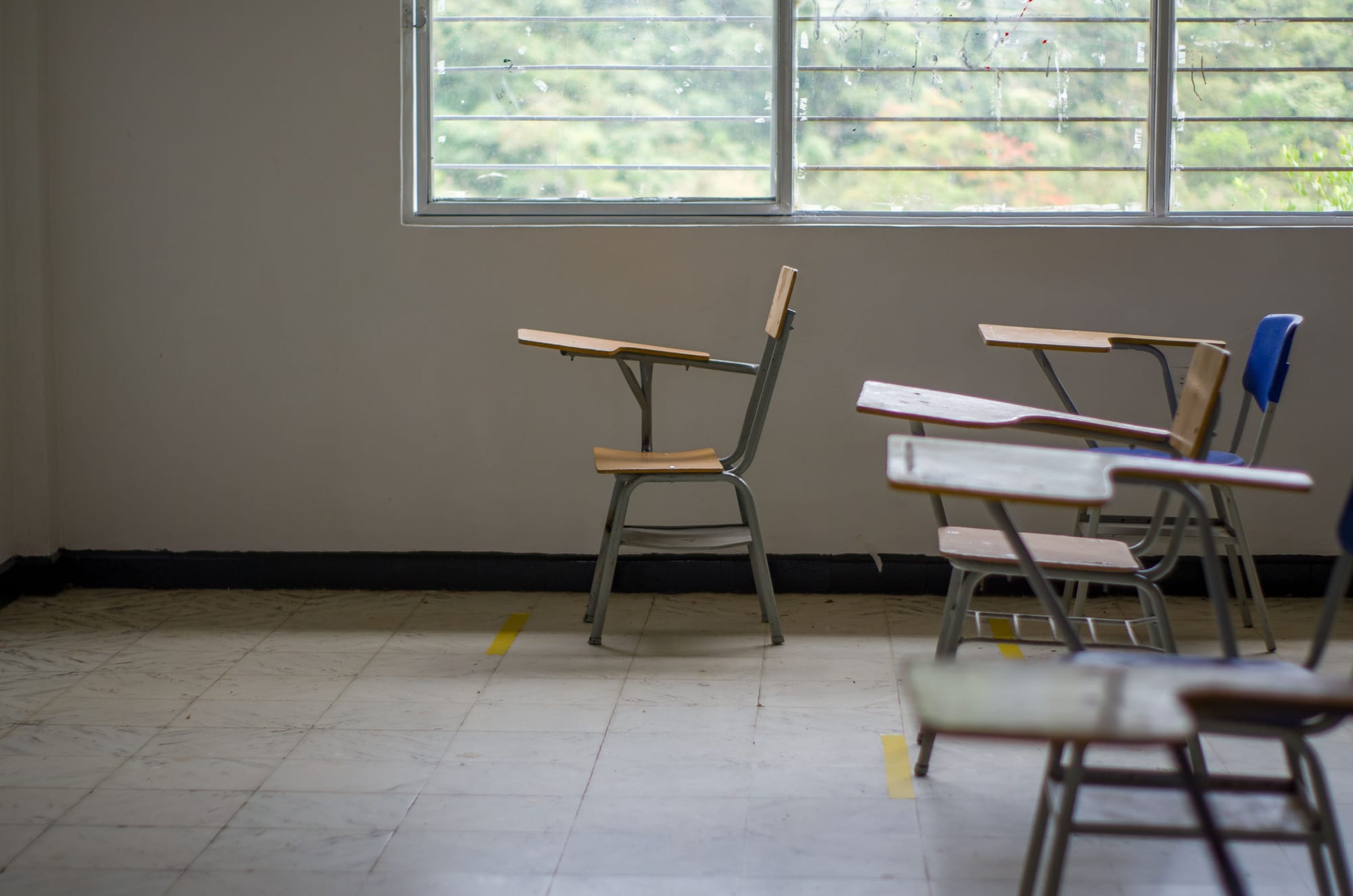
I was isolated and simultaneously in a crowded space, but my family was full of children who weren’t my own age. My mom often said that knowing kids my own age wouldn’t prepare me for the world, but I’ve since realized she had no interest in preparing me for the world. She was too busy demanding free labor from me in every waking moment. I could change diapers and entertain toddlers, wipe noses and wash high-chair trays, but I was an uneducated child myself. I knew nothing about proper childcare and education. It is difficult not to bring these things up, because the contrast is stark in my mind. But I don't want to draw additional attention about my odd past.
I am once again older than the other people in the room, but this time I’m a student returning to college. I might be closer in age to some of my professors than most of the other students. I know I’m different, but it’s difficult to tell what I’m missing. Is the communication gap because I’m a Millennial, and they are Gen Z? Or is it because I was homeschooled, and they know their way around a school setting? Perhaps it’s the accessibility device I push around that so few can name: a rollator. My non-binary presentation brings the transphobia to the surface, too. How many people can look me in the eye without doing math in their heads about how I can have both breasts and a beard?
Midterms are complete for me, and it’s been an interesting time to be in school. I’m majoring in communication, and I’m technically a Junior, but since I’m transferring in, I’m also in some Freshman classes. I’m glad I have an introduction to communication and culture class because so much has changed in the 12 years since I took one. The Internet is a different place entirely.

I keep thinking about the imagery of a message in a bottle. A note written and protected from the water, set to float out to sea. The idea is that someone might receive it with no way to respond. There’s no return address, no way to predict the way the waves might direct its course.
In 1996, Neil Peart wrote these lines about the early Internet:
Net boy, net girl
Send your signal ’round the world
Let your fingers walk and talk
And set you free
Net boy, net girl
Send your impulse ’round the world
Put your message in a modem
And throw it in the Cyber Sea
Now I see thousands of tons of those bottles washing up on beaches, swirling in giant vortexes of trash in the ocean. Who is the receiver? Who are we reaching when we write? It feels overly simplistic to analyze our audiences, like the people receiving our emails are not as complex, busy, and overwhelmed by the noise as we writers are. So many content creators have come and gone, and those who remain seem caught in the machine of endless content creation.
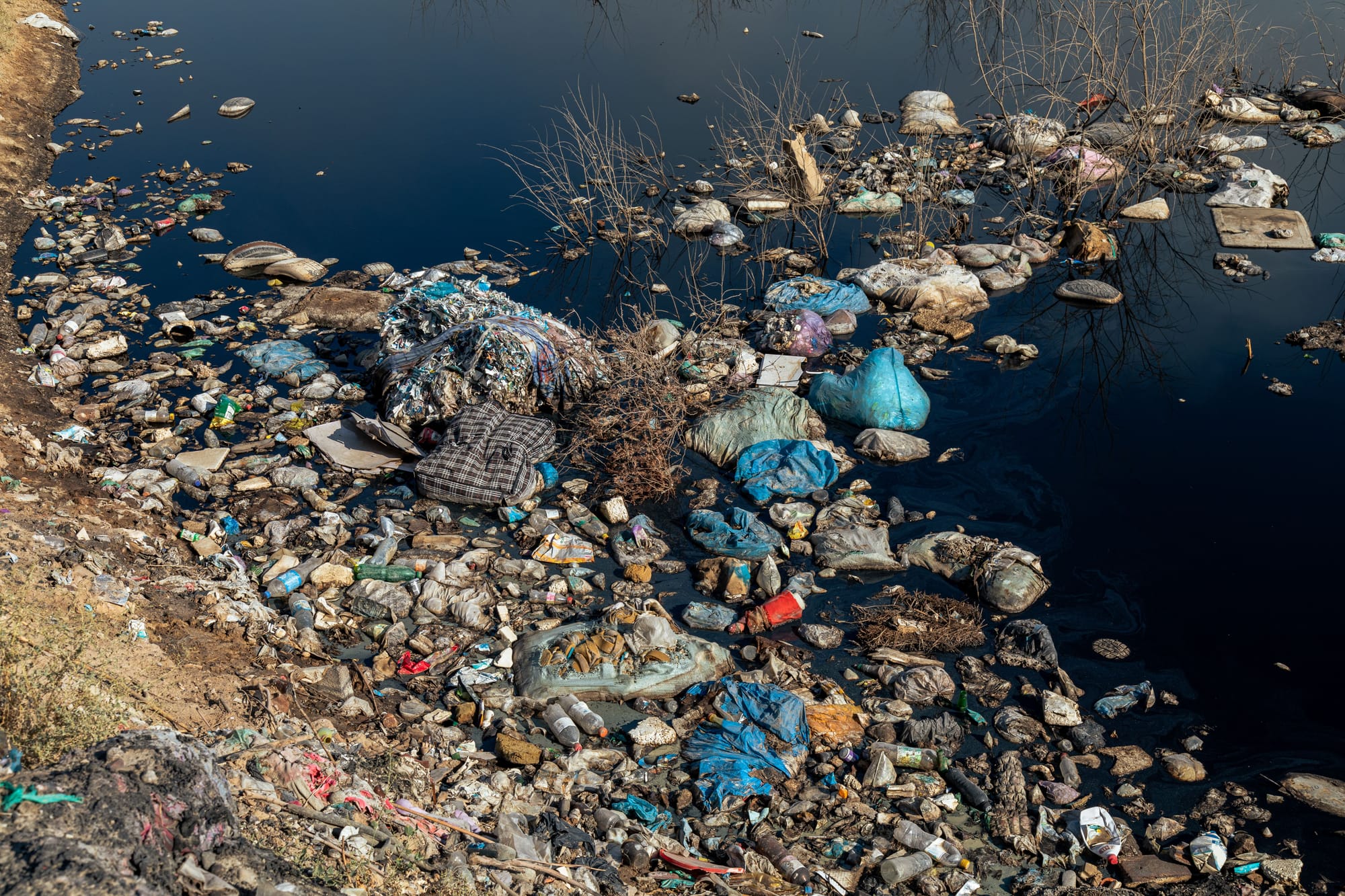
The platforms themselves keep saying “Come on in, the water’s fine!” But we can see the haunted looks in the eyes of those content creators who make less money and get less reach all the time. It’s more like the water is poisoned with plastic bottles.
In the past month, I’ve read so many interesting takes on communication. Last week we read an essay called "A Cultural Approach to Communication" by James W. Carney from 1975, introducing the concept of communication as ritual:
If one examines a newspaper under a transmission view of communication, one sees the medium as an instrument for disseminating news and knowledge, sometimes divertissement, in larger and larger packages over greater distances. Questions arise as to the effects of this on audiences: news as enlightening or obscuring reality, as changing or hardening attitudes, as breeding credibility or doubt. Questions also are raised concerning the functions of news and the newspaper: Does it maintain the integration of society or its maladaptation? Does it function or misfunction to maintain stability or promote the instability of personalities? Some such mechanical analysis normally accompanies a “transmission” argument.
A ritual view of communication will focus on a different range of problems in examining a newspaper. It will, for example, view reading a newspaper less as sending or gaining information and more as attending a mass, a situation in which nothing new is learned but in which a particular view of the world is portrayed and confirmed. News reading, and writing, is a ritual act and moreover a dramatic one. What is arrayed before the reader is not pure information but a portrayal of the contending forces in the world. Moreover, as readers make their way through the paper, they engage in a continual shift of roles or of dramatic focus. A story on the monetary crisis salutes them as American patriots fighting those ancient enemies Germany and Japan; a story on the meeting of a women’s political caucus casts them into the liberation movement as supporter or opponent; a tale of violence on the campus evokes their class antagonisms and resentments. The model here is not that of information acquisition, though such acquisition occurs, but of dramatic action in which the reader joins a world of contending forces as an observer at a play. We do not encounter questions about the effect or functions of messages as such, but the role of presentation and involvement in the structuring of the reader’s life and time. We recognize, as with religious rituals, that news changes little and yet is intrinsically satisfying; it performs few functions yet is habitually consumed. Newspapers do not operate as a source of effects or functions but as dramatically satisfying, which is not to say pleasing, presentations of what the world at root is. And it is in this role—that of a text—that a newspaper is seen; like a Balinese cockfight, a Dickens novel, an Elizabethan drama, a student rally, it is a presentation of reality that gives life an overall form, order, and tone.
Moreover, news is a historic reality. It is a form of culture invented by a particular class at a particular point of history—in this case by the middle class largely in the eighteenth century. Like any invented cultural form, news both forms and reflects a particular “hunger for experience,” a desire to do away with the epic, heroic, and traditional in favor of the unique, original, novel, new—news.
I find this intriguing, because like I said, my own communication rituals are changing. I used to be on different social media platforms, and I’m not on most of those anymore. I deleted Facebook and Twitter years ago. I left TikTok more recently. The only social media platforms I still frequent are Bluesky and YouTube, and even those are not what any of them once were.
If you'd like to read the full essay, here's the .pdf:
Where can we truly find information? Oligarchs have captured the news and our communication methods. It makes me step back and ask what I’m looking for and what I expect to keep up with. I’m horrified by certain ongoing events that I don’t know how to change. Every news article is carefully written to push a specific narrative. Even memes don’t hit like they used to. The ritual of scrolling feels like an addiction where the old habit has gone stale. It’s less social and more like drinking alone in the middle of the night.
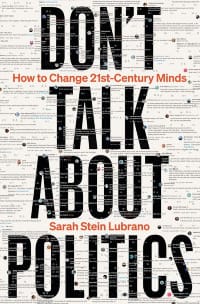
I’m listening to an audiobook called “Don’t Talk About Politics.” The title is a cheeky turn of phrase, but it makes excellent points about what works and what doesn’t. The author, Sarah Stein Lubrano, reads the audiobook with both empathy and humor. She cites research across the fields of politics, sociology, and psychology to deeply question assumptions about how people change their minds and behaviors.
Lubrano makes the case that what matters isn’t a debate or even a discussion about political values, but about the entire infrastructure where communication takes place. The most interesting chapter so far – at 74 minutes of audio – explains that when people have their needs met, they are more able to engage in their communities. It’s not that we need to talk about politics, we need to do politics. We need to participate in meeting each other’s needs in practical ways. Ultimately, trying to change minds is ineffective, and even makes us cling to our beliefs more steadfastly.

Going back to the metaphor of messages in bottles, I see more messages than can be counted whenever I scroll. The ritual remains as an empty habit with no taste left. We cannot be heard in this stormy sea, and the voices of real people are being drowned out by AI slop.
I am learning new communication rituals when I get up and go to school and do my homework, and raise my hand in class. I wonder about whether this ritual is superior – do the students get heard? What hierarchical structures are at play? Who has power, and what are we doing with what we’re learning?
The medium is still the message, and the message here is that the educational institution holds the keys to our future in a world that respects educational achievement.
Is this what the world will always be? What world would we create if we could remake it?
Let me know in the comments! Thank you for reading.