Do Stars Know About Each Other?
It’s interesting how the human mind can grasp such complex concepts and awareness, yet we have so little control over each other and even ourselves. We are doomed to observe far more than we can influence. Still, our perspectives can be so limited. My understanding of the world is so different now than what it was at earlier stages of my life, and this makes me distrust my own experience.
I have more clarity now than ever before, yet I felt like I had clarity in the past, only to see now that I was completely wrong. They say hindsight is 20/20, but I cannot have hindsight on the present. I can only recognize that I might look back on this moment one day and see more than I can see now.
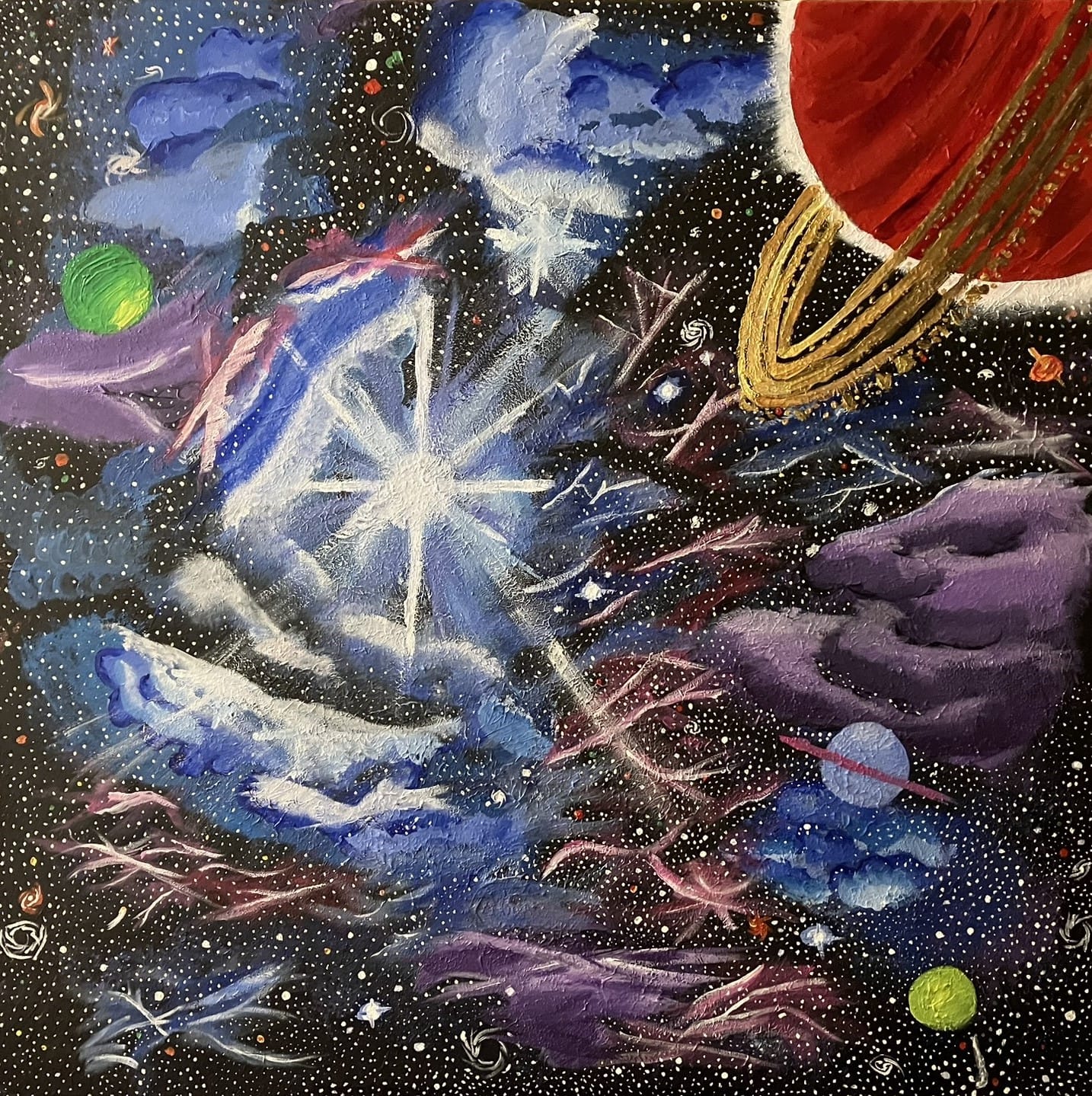
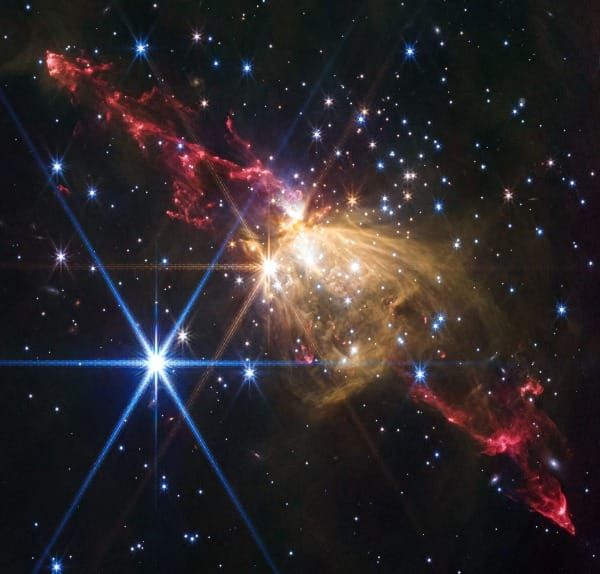
When I paint images of space, I include thousands of stars. I paint each one with care, thinking about how the distance between them might be tiny on the canvas while it represents huge amounts of space. Stars are so far apart from each other that it takes light itself years to travel from one to the next. As I paint, I wonder which tiny dots of light represent individual stars, and which ones are entire distant galaxies or even clusters of galaxies.
The universe that we can observe is so gigantic, it’s dizzying to try to comprehend. My understanding of it is rudimentary; I know this because I couldn’t do the most basic math used by astrophysicists. I sometimes wonder whether humans are the only ones who observe and understand these things about the space and universe we exist in. Do stars know they are not alone in the depths of space? If they know anything at all, it is a different kind of knowing than we experience or have observed.
These thoughts fill my consciousness with awe and wonder about the strangeness of the human experience. When I zoom out to see many stars in my mind, I think about how we are the only intelligent life that we know exists. We wonder if we are alone in the universe.
It’s a paradox—on an evolutionary trajectory, it seems impossibly unlikely that we are the only life to have made it this far. At the same time, we have not found proof. You can’t do math with such staggering odds of 1 to… an unknown but unfathomably gigantic number of planets and moons that could possibly support life.
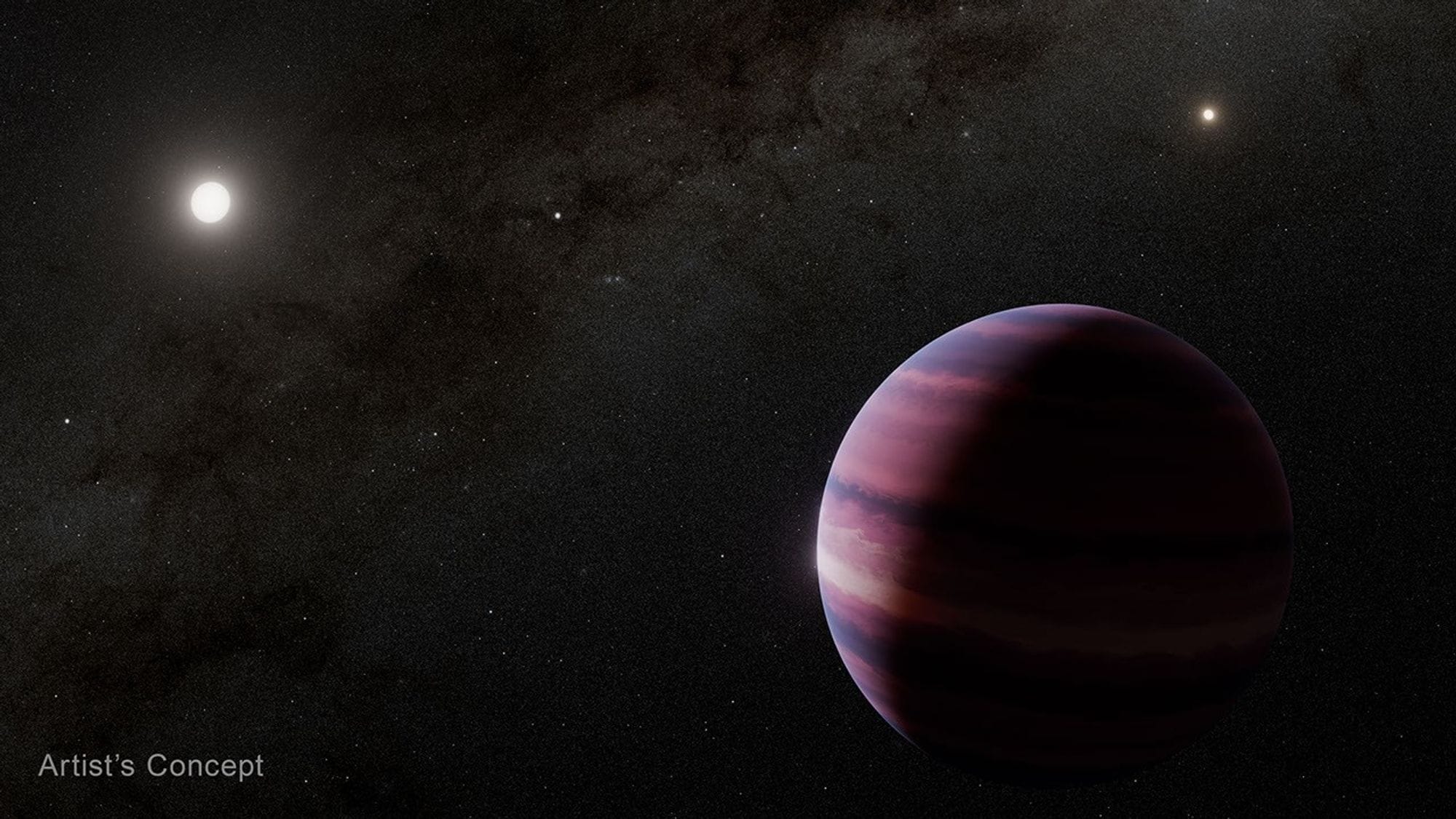
Perhaps it is just that difficult to travel across such vast spaces between stars. We can observe, but we cannot traverse where our minds can only imagine. We have managed a great deal, and this is impressive. Still, there are billions of stars to look at, and we can imagine ourselves zipping from star to star easily in lieu of traveling there ourselves. The space between what I can imagine and what I can do seems impossibly huge, too.
When I zoom in on the planet, I seem to move from wonders to a huge mess. Humans are impulsive and hatefully motivated. We inflict tremendous pain on each other, even those we would never want to hurt. Our habitual and obsessive tendencies get the better of us because, despite our incredible intelligence, our hunger has greater power than our big brains. We are still animals, beings that evolved from the most basic instincts to thirst and crave. We don’t just share these traits with other animals, but with plants and fungi, too.
All life—indeed, all of nature—is constantly in flux. We change, rapidly or slowly, into different shapes, reaching ever forward. Water flows and moves, reaching downward in rivers toward the ocean, or upward in waves toward the moon. Life reaches for sources of energy. Food, water, sunlight. We divide and compete, from the cellular level to the separation of more autonomous minds. Again, we observe without control.
There is no resolution, only the cycle of life and death. Death is not a resolution. It is an agonizing amputation. The life around the loss must move on, wounded and missing what was familiar and vital. The human condition involves being aware that we ourselves will die.
We will not learn all there is to learn. There is not enough time.
We will not do all there is to do. We can imagine the possibilities, but the distances are too great.
The most important thing we can do is focus on what is before us now. I am amazed that I exist in this universe, in the state I am in now. I cannot do everything. It is a paradox without resolution. Yet it is truly something I can perceive as much as I can. My existence is itself strange to contemplate. It will end after such a brief moment.
I cannot make it last, but I can savor it.