How I Became a Buddhist Atheist
For a long time, I have hesitated to write about myself as a Buddhist. I am still an atheist, too. Many writers have discussed mixing Buddhism with Christianity, or converting from Christianity to Buddhism, without deconstructing the problem of a deity.
The term "religion" is extremely vague, and is often contorted to include a wide variety of different things. Buddhism and Christianity are not very similar. They are so dissimilar, in fact, that they can exist alongside each other without much conflict at all.
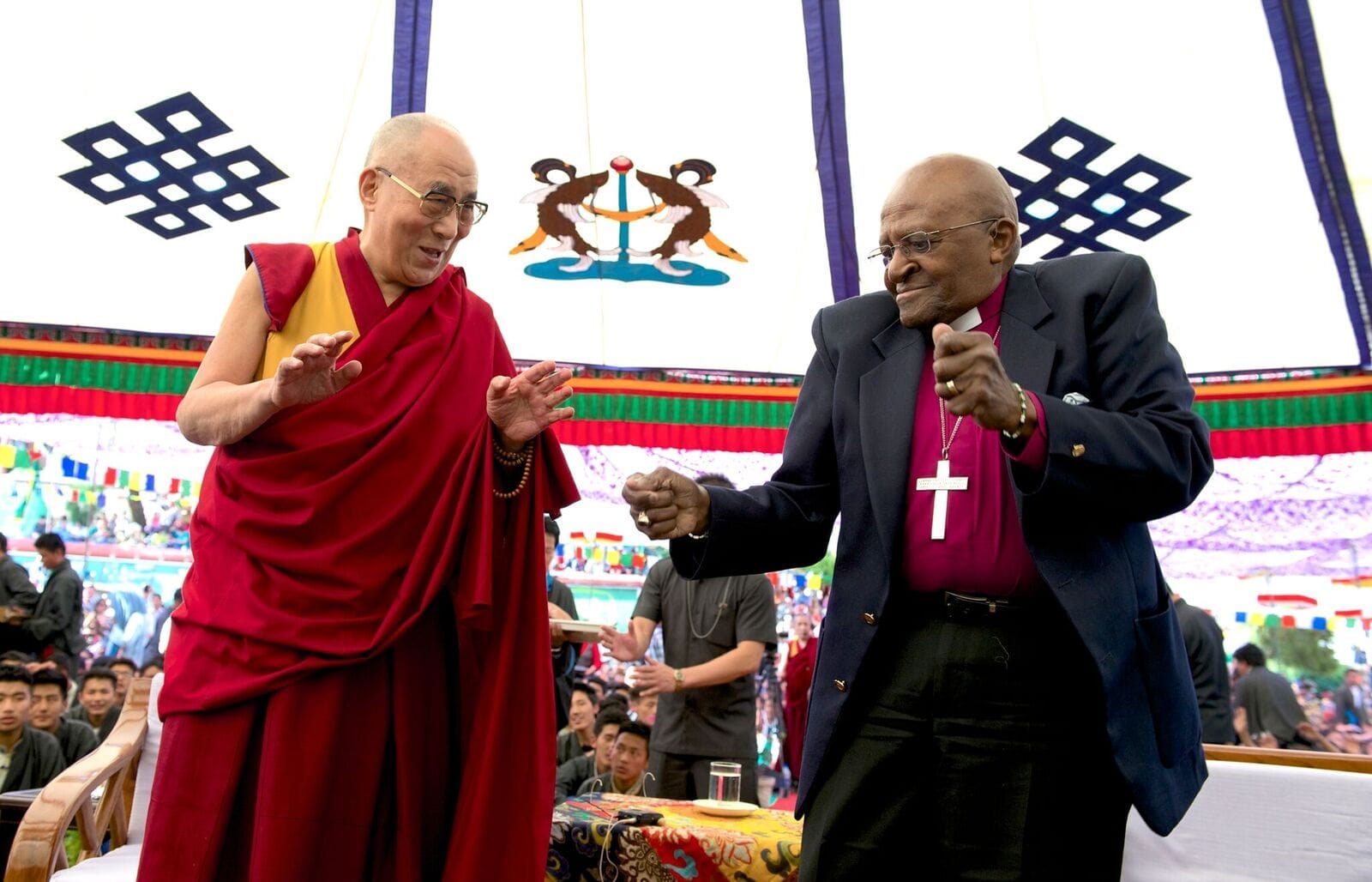
This is demonstrated in The Book of Joy, a collection of conversations between the Dalai Lama and the late Archbishop Desmond Tutu. Published in 2016 and facilitated by interviewer Douglas Abrams, this project shows how a Catholic Christian leader and a Buddhist teacher can come together in friendship and respect for each other.
Buddhism is a practice and a way of being, not (necessarily) a set of things to believe. As many Buddhist teachers have explained, it is not a set of rules or facts to memorize. Buddhism is not about gods or leaders. While teachers can share wisdom, there is not a hierarchy in the same way that Christianity sets up subservience and authority.
It is up to each individual to practice the principles of mindfulness and meditation. There is no fear of offending a deity with sinful behavior or thoughts. The purpose is intrinsic. While meditation has many benefits, it is worthwhile on its own. We are aware for the sake of awareness itself.
Buddhism is difficult to explain. This is partially because of outside assumptions. It is not strictly spiritual, thought it certainly can be. It is especially confusing to the Western mind. Some might say this is because we are too literal, but I think it is because we are not literal enough. So much of Western thought is tied to Christianity, and that obfuscates reality.

There are many examples of how Christianity obfuscates reality. It demands belief in things that are beyond nature and experience, beyond what can be proven. It reinforces this by encouraging its followers to believe what they cannot prove. At the core of the Christian story is Jesus Christ, who died and came back to life. There is no proof of this story in any verifiable documentation. Christianity states that it is true, and you must believe it to get into heaven after you die.
In the modern world, there are thousands of different branches of Christianity. Some teach that evolution is a lie of the devil. Others teach that evolution is the means by which god created everything. There are many different versions of the bible, and each one gets defended as the most accurate version. For Christians, the most important basis for understanding reality is (their version of) the bible.
By contrast, science develops with discovery. Today's discoveries can help shape what we know about how the world works. Science doesn't insist that what we thought was true thousands of years ago is final. It builds upon what we've learned so far, and continues to push the limits of what we know.
Atheism can become dogmatic and problematic. I'm not defending all atheists, nor would I ever try to do so. For me, atheism is not something I take on faith or belief. I know, from everything I have learned and observed, that deities are not real. It is possible to stretch the definition of what a "god" is, especially as something undetectable. Perhaps such a thing may exist, and we will never know.
What I do know is that the twin deities of Christianity and Islam do not exist. There is no deity that is all-powerful, yet is unable to intervene on the many injustices in this world. As for Judaism, many practicing Jews do not believe in this deity, either.

It is also possible to read everything about Buddhism and still not understand it. For me, I had been practicing Buddhism for years before I came to accept that I had become a Buddhist myself. As an atheist, I am mindful of the world as it is, in plain terms, and that is where Buddhism is most beneficial to me.
However, Buddhism is also difficult to explain because it evades explanation by nature. The simplicity of it seems too simple at first glance. It requires patience and practice to understand, yet the most “advanced” Buddhists would insist they are still beginners. This is the essence of what we call “beginner’s mind.” If you approach the practice with the assumption that you already know everything, you are not doing it at all.
The Western mind struggles with this, because we complicate things. We make practice about technique and repetition, not presence. To be present with whatever you are doing is all it takes. It is simple, yet evasive. Each mindful moment and each meditation asks the same: to be here, right now. Even as I’m writing about it, I recognize that my mindful attention is required in a different way than when I’m writing about other things.
In my upcoming posts, I will reflect on these practices and how they’ve helped me find a greater sense of balance and appreciation for life. It’s not perfect, and I don’t claim to know everything. Buddhism is very different from Christianity, or any Abrahamic faith. I am an atheist, and I am also a Buddhist. For me, this is not about anything beyond the physical realm.
The more I understand what it means to be a human being, the more I can appreciate my own life with mindfulness. To be a Buddhist Atheist is to practice awareness of the world around me.